Trying to move up in Greenhaven or the Pocket while also selling your current home can feel like a puzzle with moving pieces. You want more space, a better fit, or a different layout, but you do not want to take on unnecessary risk or miss the right house. The good news is that there is not just one way to time a move-up purchase in this part of Sacramento. If you understand your options, you can choose the path that fits your equity, comfort level, and timeline. Let’s dive in.
Why timing matters here
South Land Park, Greenhaven, and the Pocket are established Sacramento neighborhoods with strong identity and limited room for new development. City planning documents describe the Pocket/Greenhaven area as a mostly built-out river-bend district with parks, neighborhood retail, and access to open space and the river. In practical terms, that means many buyers are competing for existing homes rather than waiting for brand-new inventory.
That matters if you are making a move-up purchase. Recent market data shows the Pocket as most competitive, with Greenhaven and South Land Park also ranking as very competitive. Median sale prices also show a meaningful spread, with March 2026 figures around $595,000 in South Land Park, about $612,000 in the Pocket, and roughly $784,164 in Greenhaven, so the jump into a larger Greenhaven home can require more than just paper equity.
Understanding the local move-up dynamic
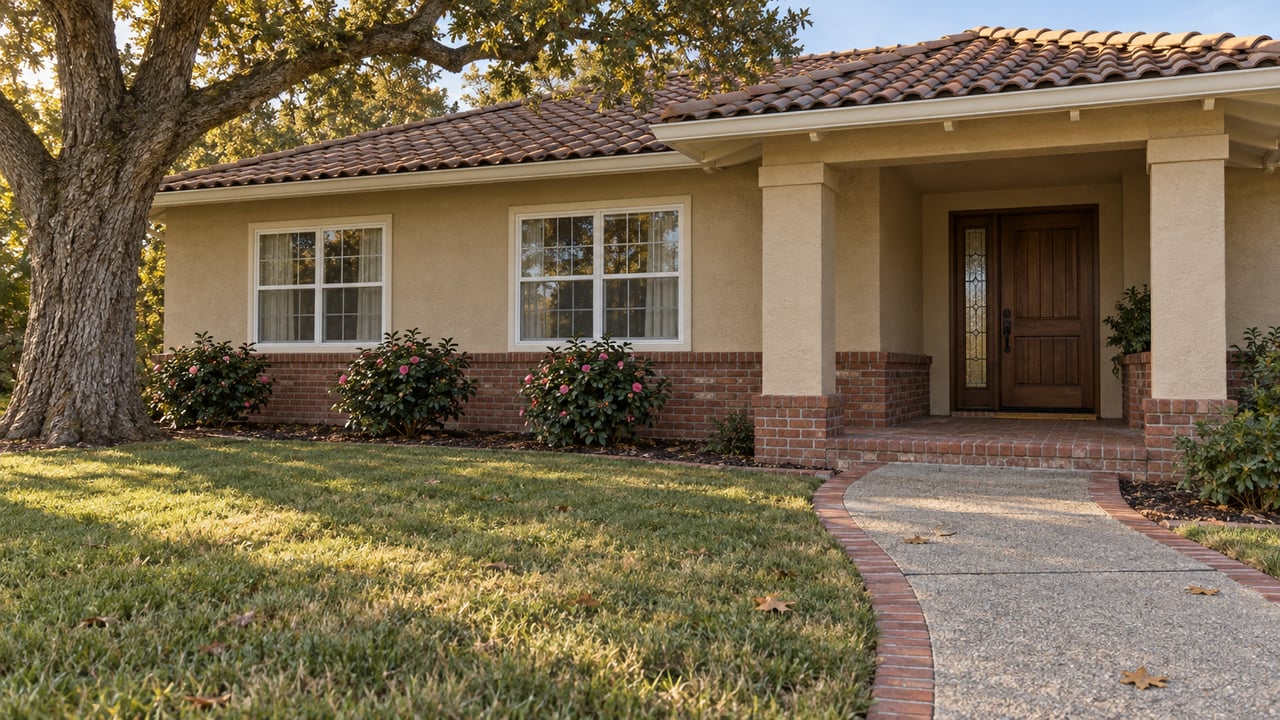
Greenhaven and the Pocket are not generic Sacramento moves. Greenhaven’s early development began in 1961 and the area is known for ranch-style single-family homes and later development from the 1970s and 1980s. Many homeowners moving within this area are not just changing addresses. They are making a lifestyle decision about home size, floor plan, lot, access, and long-term fit in a neighborhood with limited new supply.
For many move-up buyers, the question is simple: should you sell first or buy first? The answer depends on how much certainty you need, how much cash you have available, and how strong you want your offer to look in a competitive market.
Sell first for more certainty
If your top priority is financial clarity, selling first is often the safer route. Once your current home closes, you know exactly how much equity you have available for your down payment, closing costs, moving expenses, and any overlap in housing costs.
This path can also reduce stress with lending. Lenders look at your income, assets, employment, debt payments, savings, and credit history, not just your home equity. The Consumer Financial Protection Bureau also notes that closing costs typically run about 2% to 5% of the purchase price, so having a clear picture of your available cash can make your next purchase much easier to plan.
The tradeoff is convenience. If you sell first, you may need temporary housing, short-term storage, or a fast plan for your next purchase. Still, for many homeowners, especially those who want to avoid carrying two homes at once, this route brings the most control.
When selling first makes sense
- You need your sale proceeds for the down payment
- You want to avoid a larger monthly payment overlap
- You prefer a clear budget before shopping
- You want to reduce lending complexity
- You are comfortable with a temporary move if needed
Buy first if you have strong equity and approval
Buying first can work, but it usually makes the most sense when you have substantial equity, strong lender approval, and enough liquidity to handle the overlap. In a competitive area like Greenhaven or the Pocket, this path can make you more nimble because you are not waiting for your current home to sell before writing an offer.
That said, equity is not the same as cash in the bank. Even if your current home has appreciated nicely, you still need to think about the down payment source, reserves, repairs, moving costs, and the possibility of carrying both homes for a period of time. With average 30-year fixed mortgage rates at 6.36% and 15-year fixed rates at 5.71% as of May 14, 2026, payment changes can be significant when you step into a higher price point.
If you are considering buying first, your lender should help you model the full picture, including any simultaneous debt. If you use a HELOC or similar loan to access equity, that payment must be included in the lender’s ability-to-repay analysis.
Use a contingent offer when you need your sale
A home-sale contingency can be a useful middle path. A contingency is a condition that must be met before closing, and one common version is making your purchase dependent on selling your current home. This can protect you from being obligated to close on the new home before your existing property sells.
The challenge is that contingent offers are often less attractive when the market is competitive. If a seller accepts your home-sale or home-close contingency, they may still continue showing the property. A kick-out clause can also allow that seller to move to another buyer if you cannot remove the contingency in time.
That does not mean a contingent offer never works. It means your strategy has to be realistic. In Greenhaven and the Pocket, where homes can attract multiple buyers, a contingent offer tends to work best when the home has fewer competing offers, your current home is highly marketable, or your timeline is already well underway.
How to make a contingent offer stronger
- Have your current home fully prepared for market
- Price your sale realistically from the start
- Get lender approval early
- Keep your contingency timeline as tight as possible
- Be ready to move quickly if your sale goes under contract
Consider bridge financing for a cleaner offer
If you want to buy before your current home sells and avoid a home-sale contingency, bridge financing may be the better tool. A bridge loan is short-term financing that lets you access equity in your current home before it sells. In practical terms, this can help you make a cleaner offer and compete more like a buyer without a sale contingency.
This path can be especially helpful when the right Greenhaven home appears and you do not want to lose it while waiting for your current home to close. It can also reduce the need for temporary housing if you can line up your purchase first and then sell your current property on a more controlled schedule.
But bridge financing is not automatically the best answer. You need lender approval, enough income and reserves to support the plan, and comfort with the short-term cost. The right question is not whether bridge financing sounds convenient. It is whether it improves your position enough to justify the added complexity.
When a bridge loan may beat a contingency
- You have strong equity in your current home
- You want your offer to look cleaner to the seller
- You have lender approval for the short-term financing
- The target home is likely to attract heavy competition
- You want to avoid missing a home while waiting to sell
Use a rent-back to smooth close timing
Sometimes the issue is not whether to sell first or buy first. Sometimes it is simply that the two closings are close, but not perfectly aligned. That is where a rent-back can help.
With a rent-back, the seller stays in the home after closing for an agreed period, usually with rental compensation and a final move-out date negotiated in the contract. For a move-up seller, this can create breathing room. You can close your sale, access proceeds, and still have time to close on your next home without moving twice.
This option can work well when your purchase is already lined up and you just need a short buffer. It is not a fix for every timing problem, but when closings are only slightly off, it can be one of the simplest ways to reduce stress.
Do not forget liquidity and closing costs
One of the biggest move-up mistakes is focusing only on sale proceeds. Your timing decision should also account for cash needed before and after closing. That includes your deposit, lender fees, title and escrow costs, moving expenses, repairs, storage, and any temporary housing.
The Consumer Financial Protection Bureau notes that closing costs typically run about 2% to 5% of the purchase price. On a higher-priced Greenhaven home, that can add up quickly. A sound move-up plan looks at both equity and liquidity so you are not caught off guard.
Prop 19 may affect your timing
If you are 55 or older, severely and permanently disabled, or eligible due to wildfire or another disaster, California’s Proposition 19 may matter to your move. The California State Board of Equalization says eligible homeowners can transfer their base-year value to a replacement primary residence anywhere in California. For age-55 or disabled claimants, the benefit may be used up to three times.
Timing matters here too. If you buy the replacement home before selling the original home, the original home must be sold within two years. The Board of Equalization also says you will pay taxes based on the full fair market value of the replacement home until the original sale closes, and the claim filing deadline is within three years of the purchase or completion of the replacement home.
Because tax treatment can affect your net costs, this is an important part of the timeline for eligible move-up buyers in South Land Park, Greenhaven, and the Pocket.
Factor in location-specific diligence
A move-up purchase in this area is not only about price and timing. It is also about understanding the local setting. Sacramento’s 2024 flood management plan says the Pocket area is subject to flood damage, internal drainage issues, riverine flooding, and possible levee breaches. The same report notes evacuation can be difficult because the Sacramento River curves around the west side of the Pocket.
That does not mean you should avoid the area. It means you should go in with open eyes and complete diligence. If you are comparing homes in South Land Park, the Pocket, or Greenhaven, timing your purchase should include enough room for property disclosures, inspections, insurance questions, and neighborhood-specific review.
Transportation and daily convenience are also part of the equation. City planning documents point to I-5 as the main north-south connector, with Pocket Road, Florin Road, Riverside Boulevard, and Greenhaven Drive as key local thoroughfares, plus transit connections to downtown from the Pocket Transit Center. For many move-up buyers, that access, along with greenbelts, parkways, and river access, is part of why these neighborhoods stay in demand.
A practical way to choose your path
If you are not sure which timing path fits you, start with three questions:
- Do you need your sale proceeds to buy the next home?
- Can you comfortably carry overlap costs if the timing is imperfect?
- How competitive will your offer need to be for the homes you want?
If you need certainty, selling first is often the best fit. If you have strong equity, lender approval, and reserves, buying first or using bridge financing may open more doors. If your closings are close together, a rent-back can be the tool that makes the whole plan work.
In neighborhoods like Greenhaven, the Pocket, and nearby South Land Park, timing is rarely about finding a universal rule. It is about matching the right strategy to your finances, the local competition, and the kind of home you want next.
If you are weighing a move-up sale and purchase in Sacramento’s established neighborhoods, Angela Heinzer can help you map out the timing, value your current home, and build a plan that fits the market.
FAQs
Should I sell first or buy first in Greenhaven, the Pocket, or South Land Park?
- If you need certainty about your budget and sale proceeds, selling first is usually the safer choice. Buying first can work if you have strong equity, lender approval, and enough cash to manage overlap costs.
Can I make a contingent offer on a home in Greenhaven or the Pocket without losing the house?
- Yes, but it can be harder in a competitive market. A contingent offer may still work if your current home is ready to sell quickly, your financing is solid, and the seller does not have stronger non-contingent offers.
When does a bridge loan make more sense than a home-sale contingency in Sacramento?
- A bridge loan may make more sense when you have strong equity, can qualify with your lender, and want to present a cleaner offer on a home that is likely to attract multiple buyers.
Can a rent-back help if my sale closes before my next home purchase?
- Yes. A rent-back can give you extra time in your current home after closing so you can access sale proceeds and reduce the chance of a rushed or double move.
Does Proposition 19 help move-up buyers in California keep a lower property tax basis?
- It may. Eligible homeowners, including many who are 55 or older, may be able to transfer their base-year value to a replacement primary residence in California if they meet the Board of Equalization rules and timing requirements.