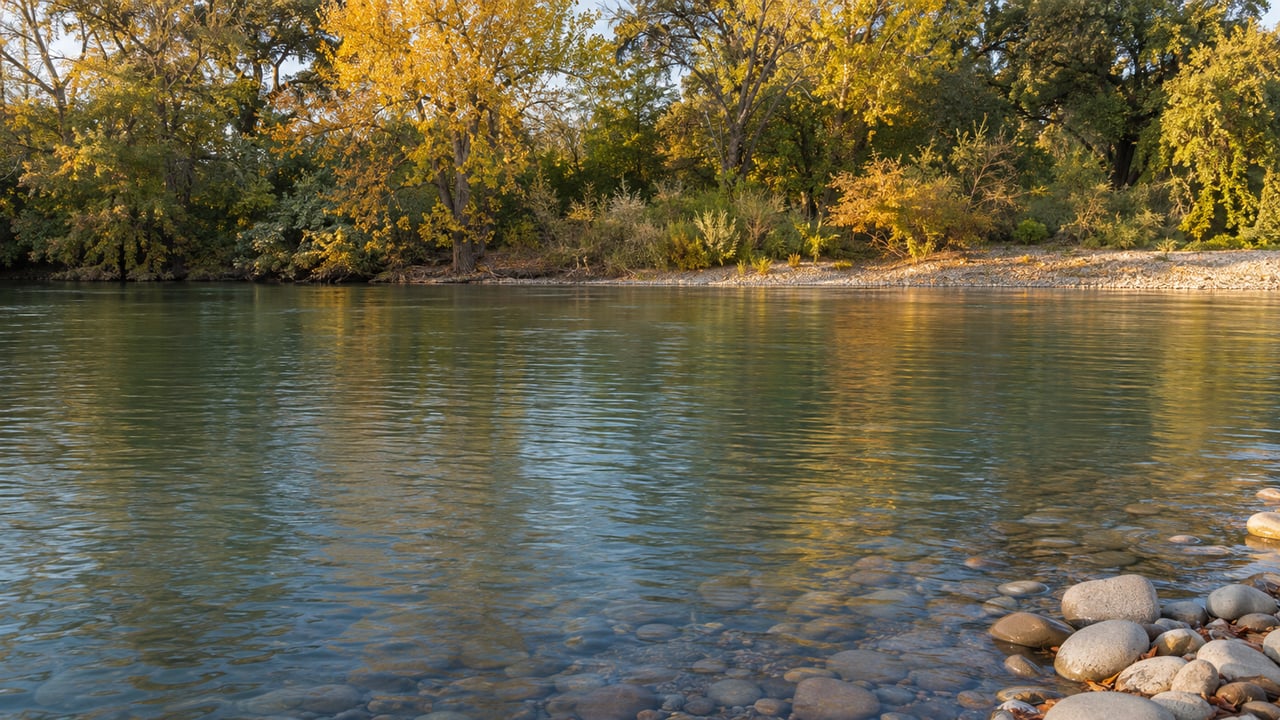
Chinook salmon are spawning in the American River near Del Dayo this month. This year, the 2026 sport-fishing rules split that stretch of river at a SMUD power line over the southwest boundary of Ancil Hoffman Park. Upstream of the line, toward Nimbus, the Chinook season closed on Oct. 31. Downstream of it, the season runs through Dec. 31. So for November, the miles of river that public agencies have spent years rebuilding as spawning gravel belong to the fish alone, and the line falls in the same park as Effie Yeaw Nature Center.
This is also a bigger year than most. In its May 12, 2026 announcement, the California Department of Fish and Wildlife said salmon fishing would return to the Sacramento River after three straight years of closure. The same release promised "a full season on the Feather, American and Mokelumne rivers after a shortened season in 2025."
Why There Is a Full Season to Divide
CDFW credited the reopening to several things coming together at once: more hatchery production, salmon research and habitat restoration, a run of good water years, dam removals, and the inland and ocean fishing closures of the past few seasons. CDFW Director Meghan Hertel described the moment in the department's release:
"It is a moment of genuine celebration for everyone invested in the health of our watersheds."
The Fish and Game Commission adopted the rules on May 6. They took effect July 15, 2026, according to the Commission's 2026 regulations docket. The general Central Valley fall-run season opened July 16, with "some variation for upper and lower stretches of the rivers." On the American River, Ancil Hoffman Park is where the upper and lower rules meet.
The Line at the Park's Southwest Edge
The adopted regulation text divides the river into reaches. Two of them meet at Ancil Hoffman:
| Reach | Runs from | Runs to | Chinook season in the adopted text |
|---|---|---|---|
| Upper reach | USGS gauging station cable crossing, about 300 yards below the Nimbus Hatchery fish rack | SMUD power line crossing at the southwest boundary of Ancil Hoffman Park | Opens July 16, ends Oct. 31 |
| Lower reach | SMUD power line crossing at Ancil Hoffman Park | Jibboom Street bridge | Opens July 16, runs through Dec. 31 |
The adopted text also limits the upper reach to barbless hooks during its season. Bag limits and the finer points vary by reach and date, so anyone planning to fish should read the regulation itself. This post is general information, not legal advice; check the official CDFW rules or contact the department directly before fishing.
The boundary matters because of timing. CDFW says the salmon run happens in fall, and hatchery operations for it run from the beginning of November through mid-December. So as the run reaches the upper river, the upper reach has already closed to Chinook fishing. Upstream of the power line, November and December go to spawning.
What Sits Upstream of the Line
The closed upper reach includes the gravel bars where the most restoration work on the lower American River has gone. The Water Forum's habitat project archive lists several of them:
- Upper Sailor Bar. Gravel was added to improve salmon and steelhead spawning. By fall 2019 the site had more than 1,000 redds, the gravel nests salmon dig to lay eggs. In 2018, before the work, none were counted there.
- Nimbus Basin and Lower Sailor Bar. About 41,000 cubic yards of gravel were placed just below Nimbus Dam.
- River Bend. Work on Upper River Bend took place in 2023, and a River Bend project was completed in 2024.
The jump from zero redds to more than a thousand at Upper Sailor Bar is the case for this kind of work in one figure. It also explains where salmon gather each November. Fish dig redds where the gravel suits them, and much of that gravel was put there on purpose, upstream of the line that now closes fishing in November. Sacramento County Regional Parks describes Sailor Bar as a river-fishing and nature-trail access point on the parkway.
At the top of the reach is Nimbus Fish Hatchery, at 2001 Nimbus Road in Gold River. It raises Chinook salmon and steelhead for release into the American River.
What the Hatchery Trap Recorded in Early November
CDFW posts dated entries from the Nimbus Hatchery trap. These count fish entering the hatchery, not the full run in the river, but they show the fall run is underway this month.
| Trap date | Total Chinook entries | Unmarked | Marked |
|---|---|---|---|
| Nov. 2, 2026 | 382 | 309 | 73 |
| Nov. 5, 2026 | 342 | 271 | 71 |
Unmarked fish outnumbered marked fish by roughly four to one on both days. Among unmarked adults, females outnumbered males: 156 to 127 on Nov. 2 and 141 to 97 on Nov. 5. The rest of each day's total was fish the dataset logs as juveniles.
The hatchery grounds are open, but the building is not. The CDFW hatchery page says the Visitor Center, which the federal Bureau of Reclamation owns, will stay closed until further notice while CDFW and Reclamation work out a reopening date. The hatchery parking lot is open daily from 7 a.m. to 3 p.m. The raceways, the outdoor ponds for young fish, close around 2 p.m. A nature trail runs along the river beside the hatchery, and the American River Parkway trail is right next to it. CDFW says hours can change with staffing or weather and posts updates on the hatchery's Facebook page.
Effie Yeaw at 50, on the Line Itself
Effie Yeaw Nature Center is at 2850 San Lorenzo Way, inside Ancil Hoffman Park. The center opened in 1976, and 2026 is its 50th anniversary. Its namesake, Effie Yeaw, lived from 1900 to 1970. She was an educator and naturalist who started Sacramento's first nature study programs, helped found the Save the American River Association, and played a key part in creating the American River Parkway.
The building itself is slated for renovation. The center's news page describes improvements funded through a partnership with Sacramento County, the California Natural Resources Agency, the Diepenbrock Family and the Yoche Dehe Wintun Nation. The work covers better ADA accessibility, new interactive exhibits and long-planned renovations. The center says the first phase will intermittently limit access to the main building and museum for up to two months. For that period it plans a pop-up store in the Assembly Building, across from the main building, selling park passes, refreshments and merchandise. The trails, playscape and other outdoor areas stay open throughout.
The center's main salmon program this month is outdoors:
- What: "Family Program: Scent-sational Salmon," a 30-minute talk by a naturalist followed by a one-hour guided walk to the river to see the salmon.
- When: Monday, Nov. 23, 2026, 10 to 11:30 a.m.
- Cost: $10 for ages 13 and up, $5 for ages 4 to 12, free for ages 3 and under, plus service fees. Parking is included in the ticket.
- Weather: If the weather is bad, a craft replaces the hike.
The center's event listing puts it plainly: "The Chinook 'King' salmon are returning from the ocean to spawn in the American River."
Getting to the Water Without Your Own Gate
Sacramento County charges an $8 vehicle entry fee at Ancil Hoffman, Sailor Bar and Sunrise, and a countywide annual vehicle pass costs $70. The county's pages for Sailor Bar and Sunrise Recreation Area say parking fees there are collected year-round, weekends included. The Nov. 23 Effie Yeaw ticket already includes parking, so a pass pays off only for repeat trips upstream to Sailor Bar and Sunrise. The Nimbus lot, at the top of the closed reach, is open 7 a.m. to 3 p.m. daily.
For Del Dayo, the salmon run is part of the neighborhood each November, and this year's rules put the boundary right at the park. If you're thinking about what living this close to the river means for your own home's value, Angela Heinzer has worked Carmichael's river neighborhoods for 36 years and would be glad to walk you through it. Get Your Free Home Valuation.